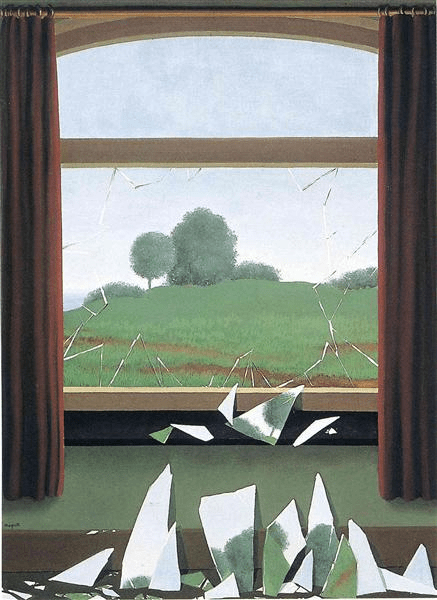
A common plight of those with a theoretical bent is that they often take too long to think what most people feel in a moment. My intent here, unfortunately, is to do just this. Recent political and social strife, especially within the United States, has brought to the fore just how difficult it has become to know what is actually going on in the world—particularly events that are distant from one’s own experience. The principles highlighted by recent news, however, apply equally to how one interacts with situations that are not so obviously troublesome or urgent. My claim is relatively simple, but I hope to gesture in a number of directions that may deepen our understanding of the present moment and recommend a touch more humility, skepticism, and civility in how we conduct ourselves.
My proposition: We need to recognize that technologically mediated communication necessarily throws us into a form of aesthetic interpretation that is, in essence, erroneous. To explain this, I have chosen to make a philosophical excursion into the thought of Aristotle and R. G. Collingwood to inform the viewpoint I am articulating; from there, I come back down to earth and explicitly address what has been happening in Minneapolis—not to take sides but precisely to suggest that these ‘sides’ are vicious fictions.
Before entering into my argument, I want to preemptively address two major objections that I foresee. The first is that I am advocating for a kind of quietism or indifference that puts the lives of real people at risk. I cannot say that there is no substance to this concern, but I would ask such a critic to pose the same question to themselves: is not the intensity—artificially heightened by the distortions of technological communication—equally guilty of placing lives at risk? Is demanding action and forceful interference not increasing the likelihood of such tragedy? The point is not that one ought never to act, but that action divorced from historically situated understanding ceases to be prudential and becomes merely reactive—claims I will clarify momentarily.
The second objection is that my viewpoint offers a false skepticism about our ability to know what is going on. To this, I will ask how someone can be certain of the facts they claim to support their position. Is the assumption that simply absorbing more technologically mediated content is sufficient to overcome this problem? I am skeptical of this too, which will become clear in due course. What is absent is not information as such, but the historically embedded understanding required for practical judgment.
Let us begin in ancient Greece. In his Poetics, Aristotle suggests that poetics have a greater power than history to reveal truth. Of course, Aristotle takes philosophy as the proper conveyor of truth, but his notion is that poetics more closely approximate this process than does history. History is merely the recounting of events in a manner that does not dwell on the essence of things; on the other hand, Aristotle sees in poetics—especially as embodied in the dramatic arts—the ability to distill universal essences that are the object of philosophic enquiry. Poetics transform these essences into graspable and digestible particulars for contemplation in a more pedestrian fashion. To take an example: Sophocles’ Antigone highlights the tensions between divine and political goods in a manner that the mere recording of historical events never could; moreover, it does so in a dramatic manner that even the non-philosopher can appreciate.
There can be no doubt that poetic imagining does offer this contemplation of essences in a more particular and accessible form. This perspective can, however, also distort our understanding of how to interpret a given historical instance. When considering a work of art, there are two sources of interpretation that people ineluctably need to invoke: the work of art itself, and whatever their own views about the world may be. Thus, in interpreting the character of Macbeth in Shakespeare’s play, one must carefully consider the script to detect what causes a lust for power and deceitful action; what is not presented in the play and is therefore subject to dispute will be mediated by the experiences and ideas of those thinking through the work of art. Perhaps one person believes in angels and demons and so thinks that Macbeth was possessed in some manner, but there is another reader who wants to chalk things up to childhood psychology and thus ponders how Macbeth was brought up. Such interpretations are not of concern here, as what we are considering is how those external imputations then affect the interpretation of what is given in the text. This is a legitimate move as there is no background, no greater world outside of the poetic imagining: it only is what is presented, and the rest is a matter of incontrovertible speculation. This speculative aspect, when properly situated, is an integral feature—not a bug— of poetic contemplation and is much of the delight to be found in this form of experience.
The problem is that practical life is not poetics; the poetical may intrude, but our lives do not conform to these same standards. For one, practical realities are infinitely more complex in their saturation of ‘characters’ and the actual circumstances that stand behind each of them. Moreover, though daily activity may involve people and events from which some sort of essences can be abstracted, the reality is that the essences can never be determinative as such. To properly situate myself in my life, the various roles I play that might have essential features cannot fully specify my contingent affairs. To merely know myself as man, husband, father, teacher, etc. can never clarify my being in toto. I must disclose all those realities together in a manner that can only be described as unrehearsed, at least as known subjectively. That subjectivity is not, however, entirely unmoored from any referent; it is attached to a history, a common identity from which essential features can be gleaned and inform its movement into the future.
This is, approximately, what R. G. Collingwood called ‘historical consciousness.’ What Collingwood wants to highlight is that essences are always abstractions gleaned from the flow of history; even Aristotle recognized this, as he understood a ‘nature’ to be the generally observed character of a given type of thing: rocks, trees, and human beings have essences that are known because we abstract some common notion about them. This will never, however, give one an understanding of the rock a boy inspects to skip across the pond, the tree planted into one’s front yard to grow with one’s children, or the person one chooses as her husband. The abstractions are not uninformative, but they are not perfect and do not address our particularity sufficiently. Collingwood would remark that Alexander’s love for Cleopatra could never be reduced to essentialist definitions; such essentialism would need to be supplemented or, arguably, overcome by proper historical knowledge in order to properly grasp their love affair.

What I hope to have sketched here, even if meagerly, is a recognition of a distinction in what a given form of presentation allows us to think through. Aristotle rightly offers the poetic construction as a graspable image through which an idea may be contemplated, but this highlights essence rather than actuality. Collingwood helps us to recognize that this gives us little direction in our historically situated experience; such abstracted essences need flesh, as our bones are properly carried through life by the complex particularity from which those abstractions are gleaned. (To be clear, I do not see Aristotle and Collingwood to be at odds; the articulation of historical consciousness smacks of a resemblance to Aristotle’s exaltation of prudence as the mark of the fully developed human being.) We must then return to the problem of technological communication: in what ways does such mediation transform historically situated events into objects of aesthetic contemplation, and how does this distortion affect our capacity to exercise practical judgment about current affairs?
Technological mediation, I suggest, increasingly presents real events in precisely the same abstracted and dramatized form once reserved for poetic imagination. Perhaps ironically, we need to paint something of a picture here in a way that seems more poetical than historical—though I do not see this as a problem insofar as what I am performing here is more philosophical than outright practical; we are philosophizing about the practical. The picture begins to form in response to a query: How are people coming to their determinations about various goings-on in the world today? For the most part, we ingest brief online videos of various occurrences, which are usually no longer than five minutes (and that is actually lengthy, in most cases); we then can find hours of video and thousands of words from people located all over the world trying to interpret these instances through those technological media. The scale of the latter in relation to the former is rather mindboggling—but commentary about commentary is not our present concern. What should be the focus here is the actual footage and information distributed about these instances. (I am, generously, assuming that the advent of AI-generated content is not a problem here, which it obviously is.)
A recent example is the conflict between the Immigration and Customs Enforcement (ICE) agents and protestors in Minneapolis, MN, that raged during January 2026. Most notably and tragically, two civilians—Renee Good and Alexander Pretti—were killed in separate instances during that month. (Forgive my attempt here at the impossible task of remaining “neutral”; my intent is precisely not to interpret but to question our ability to do so.) In each instance, we have videos that provide a small amount of lead up to each victim being shot and killed by ICE agents. There is obvious chaos in the vicinity, the agents tend to be quickly hostile, and there is usually some level of non-compliance—though I will remain agnostic about whether this is due to fear, confusion, malice, or whatever else. After these videos are released, there tends to be an inchoate drip of further details that are hard to synthesize: a smattering of details about both the victims and assailants alongside how the confrontation emerged in the first place—though nearly all of this is frequently contested. People, via a multitude of sources, then try to consume as much of these media as possible in order to make some sort of determination about what is happening and how we ought to react to what is going on.
Given this framing, we are confronted with a problem: Is the manner of our technological consumption of such events necessarily closer to that of an Aristotelian poetic image (evidently a tragic one) or that of Collingwood’s ‘historical consciousness?’ I submit that it is obviously the former and that our capacity to ascertain the level of specificity demanded by the latter is virtually (in both senses of the term here) impossible. This being the case, we are then left to interpreting these horrid occasions in a manner that must be called aesthetic—but, as we have already noted, poetic contemplation implies incontrovertible speculation precisely because the source is acontextually received. This results in unavoidable differences that cannot be mediated by the source-material itself. The divergence between disagreeing aesthetically with such tragedies in Minneapolis and those of Macbeth’s narrative is that the former wreaks—and may continue to wreak—actual violence and death for living human beings. One cannot treat such speculation in the same benign manner as he might an argument over a play.
Technologically mediated communication necessarily places the observer in a contemplative rather than participatory relation to events. What is presented to us through screens arrives already framed, edited, and distilled into a sequence of images and narratives that invite interpretation rather than involvement. This posture closely resembles what Aristotle describes as the apprehension proper to poetics, where the spectator is drawn into the contemplation of a constructed particular that gestures toward universal meanings. Yet practical life is never about such detached contemplation, nor is practical reason properly informed by such abstracted considerations. Prudence, as Aristotle understood it, arises only within the concrete texture of circumstances known from within a lived context. Collingwood similarly insists that historical understanding requires more than the observation of appearances; it demands the reconstruction of the inner logic of events as they unfold within a web of intentions, conditions, and inherited practices. Technological mediation thus structurally impedes the very conditions under which genuine practical judgment can operate.
This aesthetic mode of presentation produces not only distance but an illusion of clarity. Images and narratives invite immediate emotional response and moral alignment, offering a coherence more akin to drama than to history. The spectator is encouraged to grasp the “meaning” of events swiftly and decisively, as though their essence had been fully disclosed. Yet this clarity is precisely what practical reality lacks. Historical situations are saturated with contingency, competing goods, and unintended consequences. When mediated fragments are mistaken for comprehensive understanding, moral certainty emerges without the grounding that prudence requires. What feels like insight is often little more than the satisfaction of having fitted an event into a preexisting narrative structure. It is in this sense that what is happening has become a series of vicious fictions.
Recognizing this limitation does not entail indifference to suffering or a retreat into passivity. Rather, it calls for a disciplined humility about the scope of one’s knowledge and the appropriateness of one’s judgments. If prudence depends upon intimate familiarity with circumstances, then the distant observer ought to be cautious in translating aesthetic impressions into demands for decisive action—a recognition that is true, though perhaps not equally, for those outright condemning ICE agents and those both defending and authorizing those same agents (and a knee-jerk reaction to assume you’re on the better side of that is precisely the problem I am pointing out, regardless of what side). Indeed, the intensity generated by mediated representations may itself increase the likelihood of rash intervention, driven more by narrative momentum than by careful deliberation. Restraint, in this sense, is not a failure of moral concern but an acknowledgment of the epistemic boundaries within which responsible action must occur.
Such humility also has implications for how we relate to those who interpret events differently. If technologically mediated understanding inevitably involves abstraction and imaginative supplementation, then disagreement is not simply the result of malice or moral blindness. Competing interpretations often arise from distinct narrative constructions imposed upon the same limited set of appearances. Much contemporary hostility stems from the conviction that one’s own aesthetic rendering captures the full truth of a situation, while others are seen as willfully distorting what is obvious. Awareness of the mediated and interpretive nature of our knowledge should instead foster civility, patience, and a willingness to acknowledge the partiality of our own perspectives.
Modern technology has not merely expanded and accelerated the flow of information; it has transformed the mode through which events are encountered. Increasingly, the world appears to us as a sequence of spectacles inviting contemplation, judgment, and emotional alignment rather than as historically embedded realities that call for prudential engagement. This transformation undermines the conditions necessary for practical wisdom and encourages moral certainty detached from contextual understanding. In such a landscape, humility, skepticism, and moderation are not optional virtues but essential dispositions. Only by resisting the allure of aesthetic certainty can we hope to navigate the present moment with the care and responsibility that genuine moral life demands.

 Hoping for Clarity