Philosophers, such as George Grant, have written accessibly about the nature of technology as being a way of living, almost a spiritual disposition, in which humanity is confined only by its collective imagination. This line of enquiry was arguably initiated and more powerfully theorized by a less accessible philosopher, Martin Heidegger, in his famous essay, “The Question Concerning Technology” (“Die Frage nach der Technik”). Therein, he writes of technology as an enframing (Gestell) that discloses all nature as a “standing-reserve” (Bestand[stück]); by standing-reserve he means not merely material that is ready for use, but beings reduced in advance to availability within a system of ordering, control, and efficiency. Effectively, when nature exists within a technological society, it becomes perceptible only as material or energy to facilitate the ends toward which the system has been ordered: this is the essence of technology. Everything is reduced to the system’s efficiency, including the human being.
Heidegger’s argument, even if not accepted in toto, nonetheless points to a question of how human beings understand themselves in the world. Technology, on his view, transforms the world from something that is in itself saturated with meaning, purpose, and reality into something that is merely waiting to be transformed into whatever machinations our historical moment has been driving toward. Heidegger does not mean this in some kind of overly-determined, historicist sense of “History” as an agent or spirit directing affairs; rather, he understands human beings to be within a flow of collective action, one in which no one determines the whole but neither does the whole persist without particular, human determinations. His concern is that the historical moment of modern Europe (and, potentially, its offshoots) has made modern humans think predominantly in terms of technological efficiency. But what does it mean to be dominated by efficiency, and what are the alternatives?
Heidegger offers alternatives in a number of directions, and I will take but one here to offer for reflection: the nature of causation. As Heidegger notes in the essay, people today tend to think of the cause of something as that which brought it about: the wooden chair is simply brought about by the carpenter. Perhaps some folks would acknowledge that the carpenter is dependent on the wood as a material upon which he acts, but this is but a side-constraint on the carpenter as the predominant transformer of the material into a new entity. One may have in the back of his mind a rather Humean notion of billiard balls moving merely because of the snooker player’s intervention—such a notion of causality, as is implicit in Hume’s writings, reveals the modern prejudice about the primacy of efficient causality that troubles Heidegger.
In response to this supposed widespread opinion, Heidegger argues for a return to Greek notions of causality. Aristotle stands in as the great expositor of four different kinds (or, I would prefer, aspects) of causation: material, efficient, formal, and final. The former pair have already been invoked in the example of the carpenter making his chair: the material cause is the wood itself; the efficient cause is the carpenter who uses his tools to shape and bind the wood into a chair. The two latter forms of causation are, however, less commonly thought of, even if understandable: the formal cause is the type or idea that informs what the carpenter is making, such that it takes on a certain shape—the form is what makes something a chair and not a table or a stool; and, last, the final cause is the purpose or end for which the object exists, such as for sitting upon while dining in the carpenter’s home.
All four of these causes are understood to interplay with one another and should not be understood as entirely separate—together, they contribute to the chair’s being and intelligibility. For example, if the final cause of the chair was not for dining but instead a king’s throne, one might imagine that the form of the chair the carpenter pursues may be more ornamental and grand than one merely for eating; if the efficient cause were not a carpenter but a metalsmith, the resulting product would necessarily be otherwise in both material and form. The different causes, then, are irreducible to one another but simultaneously mutually informative and dependent. They need one another.
This is a point where Heidegger’s analysis has real bite: he argues that there is a tendency in modernity to understand causality too strictly as being associated with the efficient cause(r). The idea here is that the machinations of human beings have been taken as the predominant form of causation: it is not that the carpenter is an equal with the material of the wood, the form of the chair, and the purpose of a seat for dining. In some sense, those causes have been collapsed into the carpenter, the maker, the causa efficiens—they are merely the workings-out of his mind. If I may level a soft critique: Heidegger is so concerned about this problem that he virtually claims that the efficient cause should be reinterpreted as subordinate to the others, which strikes me as bending the branch back too far in the other direction—though perhaps that is necessary to have it rest in proper, straight fashion.
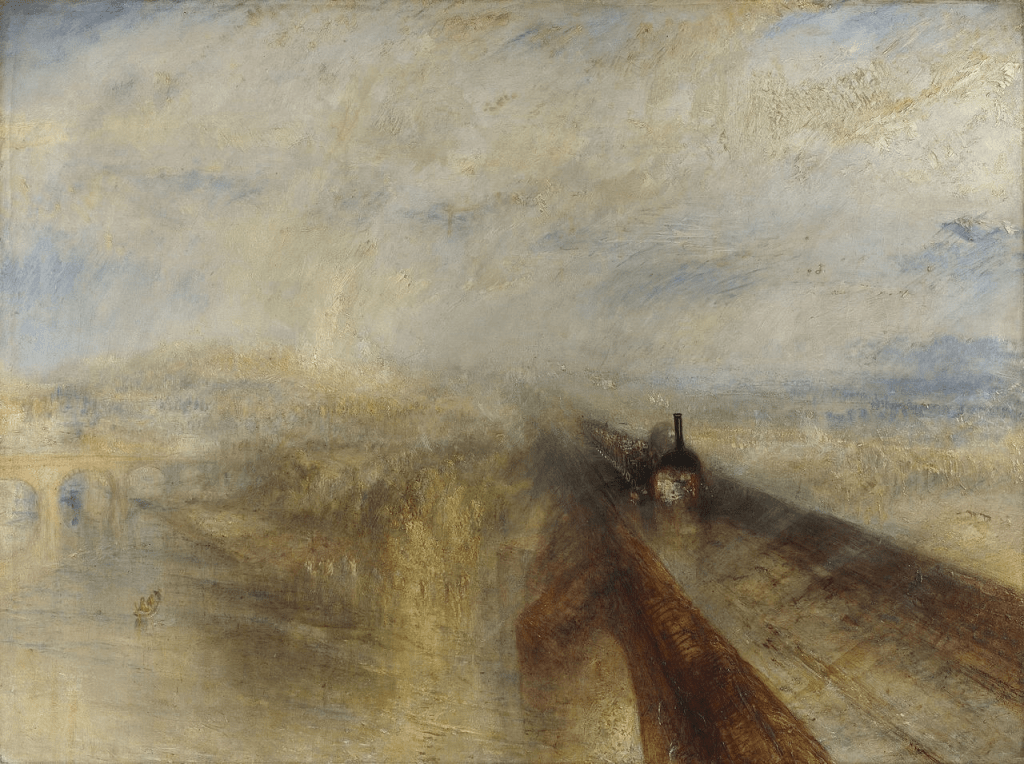
In his odd use of the term, Heidegger argues that the monopolizing of efficient causality becomes the “destining” (Geschick) of modern peoples. What he means by this is that a specific way of looking at the world is legitimated precisely because it has been repeated for whatever reasons past peoples may have had. The Germans employ a word for “history” in the sense of the determinative (as opposed to historiographical) past: Geschichte, which is evidently connected with this notion of destining (Geschick) as a “sending forth” (schicken). Though this may seem like merely an abstruse philosophical claim, there is nothing obscure about it: think of the normalization of the car, the expectation that “there’s an app for that,” or contemporary inability to imagine life without electricity—all these are specific manifestations of technology, though none of these specific examples are the essence as such. They are accreted realities that people in the present feel to be necessary only because of the choices and valuations of prior generations. In the case of technological civilization, these prior choices and valuations have presumed that the world will bend to human purposes, though those purposes often extend beyond any given people’s actual control and moral vision.
Having said all this: What is the problem exactly? This is complex and not merely about how the controlling nature of technological society winds up turning back upon man and his conniving. The problem is far deeper: when all is made subject to efficient causality, the changer of the world is destroyed because he is no longer able to think the world as such. In mistaking himself for the author of the world, he ceases to be able to reveal it on its own terms. Insofar as technology enframes (Gestell), it prevents us from encountering the world and working with it. To use Heidegger’s terms, the human being is cut off from Being as such insofar as he mistakes the latter to be subject to the former—despite that Being is the human being’s own origination. Again, here, I imagine that most readers will find this too abstract; what does it mean for a being to be cut off from Being? In simpler terms, a person comes to believe he can make the world however he likes, only to discover that whatever he imposes was already latent in the world itself; whatever a man may “invent,” in the sense of a novel creation, can only be (at best) the amalgamation of what already is prior to himself—to create something strictly “his own” would be to create nothing at all. For Heidegger, however, this dynamic is not just playing out at the level of the individual: it is happening at the level of civilization.
But this thrusts humanity back on a question: what does it mean for it to be, collectively, a revealer at the disposal of technology oriented toward control? What does it mean to reveal at all? To reveal cannot only be to create standing-reserve (Bestand), as this has no genuine form or purpose; perhaps it is one form of revealing, but it betrays itself insofar as it becomes the only one and ceases to have anything to make of the standing-reserve itself. The way out of this conundrum, in my view, is offered in a revision of causality itself that Heidegger offers in attempting to shift from the Latin to the Greek inheritance.
In the Greek notion of aitia, as opposed to the Latin causa, a “cause” is not primarily that which produces an effect through force or intervention but that to which something is indebted for its coming to presence at all. The material, formal, final, and efficient causes are not competing sources of power but mutually responsible participants in a single event of revealing. Returning to our above example, a chair “owes” its being to the four causes. Even in English, this makes much more sense; colloquially, it feels odd to say that a chair is “caused” by the wood it is made of, but it is far more clarifying to say that the chair is “indebted” to the wood from which it is constructed. The same is true of the other causes: it is indebted to the carpenter for its transformation from potentiality to actuality, the form of the chair for being in its present shape, and its end insofar as there is a way in which it will be used.
Causality (aitia), in this older and more primordial sense, is less about control than about belonging—less about imposing change than about cooperating in a bringing-forth. To be is already to stand within a web of indebtedness, a network of relations through which beings emerge as what they are. Critically, the efficient cause is not the origin in any simple sense of the other causes: the chair in its material, form, and end are all realities that extend beyond and are often given to the carpenter—his life is one of recognition and cooperation, not mere generation. What modern technological thinking obscures is precisely this mutual responsibility, collapsing the richness of revealing into a single, dominating logic of production. When the efficient cause alone is allowed to govern, the world ceases to appear as something to which human beings are bound and instead appears merely as something to be mastered—but the cost of that mastery is self-enslavement.
Heidegger’s critique of technology thus ultimately shows itself to be a critique of a forgotten indebtedness: a forgetting that human beings do not stand over against the world as its authors but within it as participants in its ongoing disclosure. Recovering alternative modes of revealing is therefore not a matter of rejecting tools or progress but of reawakening an understanding of Being as something that precedes, exceeds, and sustains human action. Only within such an horizon can humanity once again encounter the world not merely as standing-reserve, but as a meaningful order in which it already finds itself obliged, situated, and responsible. Contingent beings are indebted within Being, and thus an absolute claim to mastery and acting as the supreme cause of any other being is but folly. In recognizing the world as a network of mutual indebtedness, rather than a stockpile for human mastery, we are invited to recover the possibility of a revealing that does not dominate, but participates in, the unfolding of Being.
 Hoping for Clarity