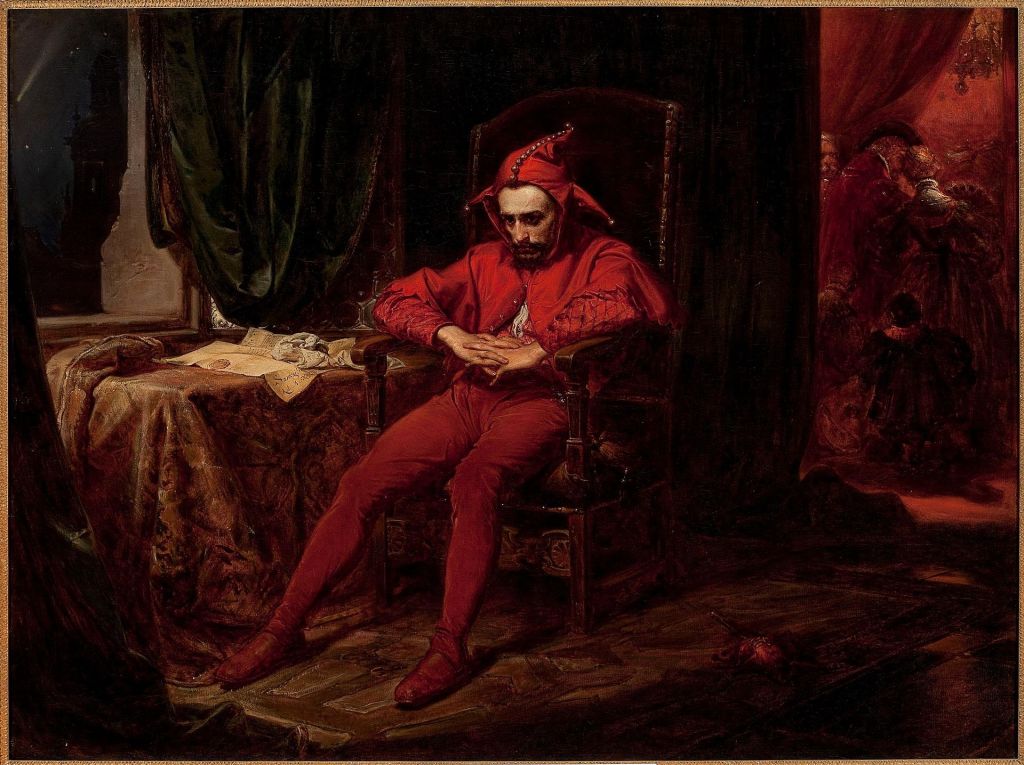
A topic which I believe has become progressively more difficult to navigate during my short lifetime has been that of humour. As certain topics or issues emerge in the cultural “dialogue” (though this may be a generous term here) of mass media, social media, and daily social interaction, there is often a debate around how to make jokes about certain topics, or if jokes are even permitted when it comes to specific ‘hot’ subjects. This has become something of a political distinction, though I think that this is evidently reductive of what is actually the case; the “discourse” around humour is, in my experience, often caricatured as being between two binary sides: one position is that of the left-wing ideologues attempting to censor anyone and everyone they disagree with, while the other is that of the conservative pundits claiming that they should be able to make any joke they please without having their “freedom” infringed upon (especially in the American context, this is quite a radical reversal; my understanding of sociopolitical discourse in the 1970s and 1980s in the U.S. were precisely the inverse: a restrictive right-wing and a laissez-faire left-wing, which just goes to show the impermanence of such ‘political’ labels).
Clearly, I think this is a rather silly distinction and one that is largely overstated. Finding people who perfectly adhere to either the concept of the left-wing ideologue or the radically ‘free’ right-winger is difficult (and not to mention evidently impermanent), and most people sit somewhere in between (some closer to one side of this binary than the other) or occupy a place that makes no sense within this binary. I would also argue that considering this in terms of political beliefs is inadequate. It is much more likely that people will feel a sense of unease with jokes that use subjects which have affected them personally; this sensitivity will be more about one’s experience of trauma or loss than about political beliefs. It probably is not best to hit one of your mates with a “Yo Mamma” joke a week after his parents were killed in a car accident (which evidently has next to no political implications). I think we all know of certain kinds of jokes that we do not enjoy merely because they hit points of pain for us in our contingent circumstances; even if we can understand the humour, laughter may not come easily.
Moving past the politics, I believe there is also a subtler distinction about humour that ought to be considered: what makes a joke immoral? This might seem a silly question, but I do not think this is so; indeed, I think we can theorize the morality of humour, even if we only get the beginnings of a theory here. In a prior post, I went over the theoretical considerations of what makes something humorous. My objective in this post is not to repeat that argument (though that piece is certainly complementary to this one); instead, my intention is to consider the directional dynamics implicit in any joke in order to consider one way in which we might more carefully consider the morality of humour. Of course, I have no illusions about the fact that this exercise will hardly prevent people from telling jokes that others find offensive or help prevent people from being offended by other people’s jokes; rather, what I hope this argument provides is a way in which to judge whether or not such offense should be considered worthy of moral condemnation – which is a much more careful point.
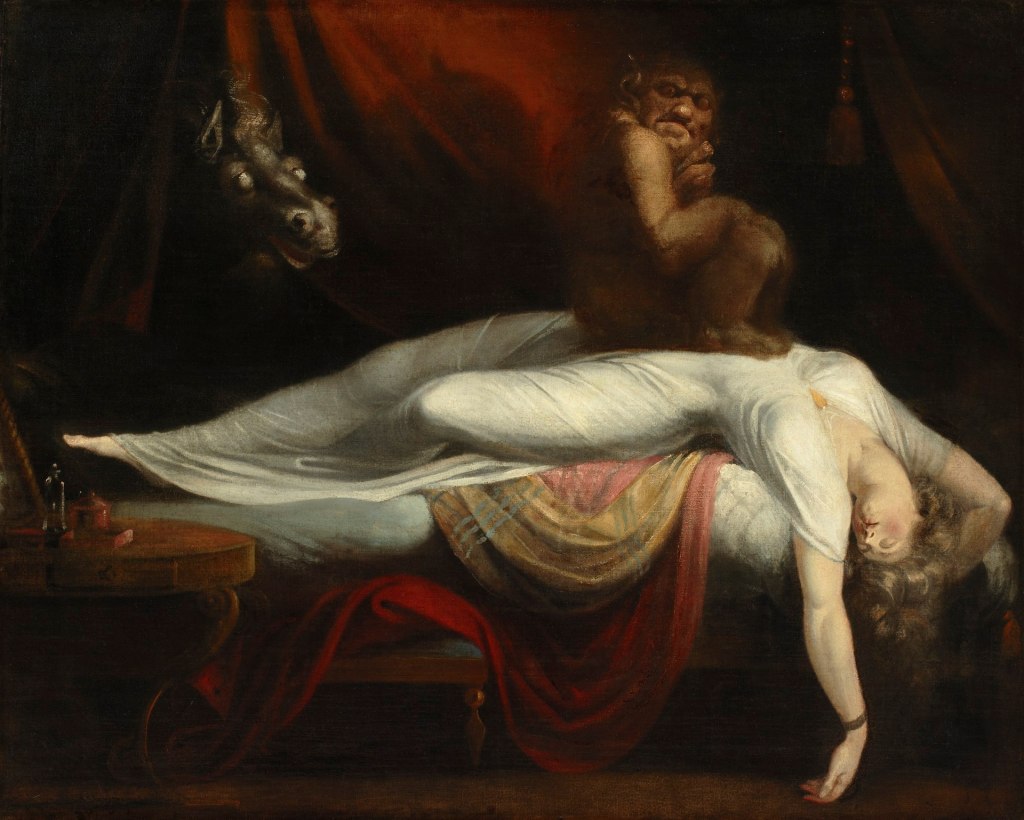
Much to my delight, my thoughts here were prompted not by an analytical work of philosophy, theology, or political theory, but rather a piece of literature written by the great C.S. Lewis: The Screwtape Letters. In this darkly humorous book, Lewis explores what a demon of Satan’s Legion would write to give advice to a newly recruited soldier of Hell. The demon in question is the titular Screwtape, and he is sending letters to his nephew, Wormwood, who is working to corrupt the soul of a young Christian man. The text takes the form of just these letters on their own, with there being a total of thirty-one epistles addressed to the young, fledging minion of Hell. Throughout the letters, Screwtape gives Wormwood various tips and tricks on how he can capture the soul of the young Christian believer, turning him from the Good of God and the Church. Despite this evidently being a Christian text, it could just as easily be stripped of its religious connotations and be seen as a psychological battle—the images of demons being forces of evil and selfishness while God is a symbol of goodness and love. Screwtape continually directs his nephew to get their assigned human to turn inward, to think only about himself and what is good for him, having no regard for the world beyond his will. In essence, the letters are a jocular take on how to make a man evil in both thought and action. Now, of course, what we can then do is invert the messages to understand how to avoid such evil thoughts of selfishness and malevolence. In reading about how these dark forces attempt to pray upon the soul and psyche of this unsuspecting man whom Wormwood is tasked with corrupting, we may understand the ways in which we experience such thoughts and inclinations in our own lives. Screwtape presents Wormwood with many ways to capture the souls of men, using everything from food and politics to lust and humour—and this last theme is, obviously, where my present intrigue set in.
This theme is largely restricted to Letter XI of the text, in which Screwtape describes to Wormwood the forms of laughter which can either further or impede (in varying ways) the corruption of their subject’s soul. He describes two forms work against their devilish purpose and two work for it; the former are “Joy” and “Fun,” while the latter are the “Joke Proper” and “Flippancy.” We should, naturally, note that these are types of laughter and not merely humour; someone looking to pick on my words would point this out, and I would grant that these are not synonymous. In the context of the work, however, I think that the negative forms of laughter are more closely associated with humour than the positive; this itself is somewhat peculiar and worth (in my view) resisting slightly, but this is not so much my interest to adjudicate at the moment. What is more important is having a brief understanding of what these four forms of laughter are.
“Joy” is a category that is opaque to the demons (it is seemingly something like ‘Happiness’) but, in the context of laughter, joy manifests as that which emerges when one is simply having a delightful time; Screwtape describes it as the sort of uproarious laughter that emerges during a dinner party at the most trivially funny occurrence – the laughter is not merely due to the occurrence but something deeper, and that profundity is ostensibly “Joy.” “Fun,” the second sort of laughter, is the sort that emerges in play, wherein there is a delight found in the mere act of doing something enjoyable; one might imagine this to be the laughter of children running about playing tag or that which is caused by some light banter among a group of seniors over a game of Euchre. These two sorts of laughter are almost entirely useless for the demons precisely because they tend to emerge in situations when humans are brought out of themselves; “Joy” and “Fun” can only be had when one is not overly preoccupied with himself as such and is instead invested in those around him, whether in themselves or engaged in a common activity. We might note that the laughter here is not clearly connected to anything like ‘humour’ as we tend to understand it, which is itself notable, though Screwtape does seemingly acknowledge that there is a kind of joking that can occur in these circumstances – though it remains undescribed in the Letter.
Now, we can move to the two forms of (potentially) corrupting laughter that are desirable for the demons. The first is flippancy, and this is quite easy to understand: it is the sort of laughter that is cynical and dismissive, that treats everything as equally meaningless and therefore relativizes all happenings. The obvious benefit of such laughter for the demons is that it makes all of life appear utterly amoral and nihilistic, which becomes a blinder to the reality of evil. The second and more insidious form of laughter that can be used for evil is related to what Screwtape calls the “Joke Proper.” This, in my opinion, is the clearest expression of ‘humour’ that we get in the Letter. To be clear, Screwtape does not suggest that this is a form of laughter that is inherently corrupting; rather, he says that it is a “more promising field” because it can disguise itself as legitimate while actually being problematic. The example he uses is that of sexual jokes and their capacity to incite lustful or twisted thoughts and desires, though this need not be the case for every joke that involves sexual content. Screwtape explains the distinction this way: someone could either tell a “joke about sex because it gives rise to many incongruities” or tell jokes that “cultivate incongruities because they afford a pretext for talking about sex.” Importantly, here, what this implies is that the laughter involved in humour is about recognizing some kind of incongruity and recognizing it as such; naturally, this can even have positive benefits, insofar as a joke about (let’s say) a husband acting poorly can remind of, or at least imply, what it means to be a good husband by way of negative example. Screwtape, however, argues that this sort of logic can also allow for people to dodge serious issues by generating a joke out of the situation. He uses the example of men excusing their immoral behaviour by overexaggerating and ‘making a joke’ of it. The incongruity in such cases distracts from the seriousness of the moral failing that needs to be addressed.
Having considered this understanding of the “Joke Proper,” we therefore have a clearer notion of what makes humour moral or immoral. We have two principles to consider in helping us determine that a joke or humorous occurrence is, indeed, moral: 1) it uses any given subject matter, profane or not, to generate a commonly-recognized incongruity; and 2) this incongruity is identified as something to be ameliorated (presently or at some point) and not merely a distraction from reality or pretext for speaking about something untoward. If, conversely, the humour is being used to either distract from reality or if the incongruity is merely a pretext to speak about inappropriate things, we might begin to suspect that a joke is morally inappropriate. There may, moreover, be greater moral gradations that we can identify: an example would be avoiding jokes that we know are likely to affront someone given some circumstance that we might know of; for example, I might stay away from telling a joke that involves cancer (even if it is not the brunt of the punchline) to a friend whose spouse was recently diagnosed with leukemia. Such specifications are ultimately contingent, prudential judgements, but we can nonetheless have a theory of why one would do that: incongruities are only identified in the service of moving toward coherence and goodness (even if not contained in the joke itself), and we avoid jokes that merely distract from reality or invoke what is deemed ‘profane’ or ‘off-limits’ for its own sake. Again, moral humour is that which recognizes incoherence in order to point toward its rectification while avoiding both profanity and distraction for their own sakes. Of course, humour is not solely qualified by merely moral considerations – thus, a pun is hardly an incoherence that has a dire need of rectification; but sorting out the incoherence is no problem, and we all know how to set the pun’s incoherence aright. This definition of moral humour simply provides a clearer understanding of why we may consider certain instances of either humour moral or immoral.
To know any of this is, of course, not to know which jokes are immoral or not. Nevertheless, this theory provides some inroads to a given person discerning if a joke should be met with moral opprobrium or not. First, in order to identify jokes that would be considered always immoral, you would need a recognized moral system that simply precludes whatever it is that is being stated. I do not, personally, know of any jokes (at least off the top of my head) that obviously fit into this category, but I would not rule out the possibility that they exist. Such demands moral criteria, and I cannot make such an assessment here without an interlocutor to know that we share given moral axioms. Second, we should note that the judgement of a joke’s morality is always dependent on one’s context. Making jokes about ‘stupid drunks’ is probably not the best idea at an Alcoholics Anonymous meeting (though there could even be some catharsis in that). This claim, moreover, has the inverted logic that a joke should be judged based on the context in which it is delivered. For example, if I came across a joke I found offensive on some blog written fifteen years ago by a fellow I am entirely unfamiliar with, I would not judge that nearly as harshly as if an intimate friend of mine deliberately told me a joke about which he knew I would be particularly sensitive. Finally, I might note that humour and joking may, as a whole, be illegitimate in certain instances. Cracking a joke in response to your friend telling you they had a miscarriage after five years of trying to have a baby is unlikely to go well. This, however, is more a question of the morality of humour as an activity as a whole rather than my more restricted consideration of the morality of a given joke as I have been discussing here. This itself could merit a discussion (something for another day), but noting it here is nonetheless relevant.
There is, then, more theorizing to be done with regard to humour. Of course, my contention that humour is the recognition of incongruity or incoherence is itself contestable; moreover, one might argue that I have herein provided an inadequate consideration of what makes a jokes off-bounds; lastly, I admit that this is not a theory that address the entire realm of humour and joking as such within the complexity of moral life as a whole. This will have to be left, for myself and others, to continue at a later time. For now, however, I can only encourage that both morality and humour be taken quite seriously; for it is only in the playfulness afforded by humour (among other activities) that the seriousness of morality can be endured with patience and grace.

 Hoping for Clarity