Though it is never the purview of philosophical reflection to impose the correction of errors it perceives in daily life, such theorizing can render clearer aspects of our habits that may make us reconsider our actions – whether this induces a change in behaviour or merely changes our perceptions of what we do. Herein, I want to reflect on a particular word that I think causes much confusion for us English speakers, though there may be a similar problem in other languages – particularly among those that are children of Latin. The word of interest for me here is nature, as well as the adjectival form of natural or the adverbial naturally. These words though seemingly one in essence are hardly so; they can be used in widely disparate ways and I think this is important to mull over in more detail than many might initially think worthwhile. I believe this presents a severe confusion in our speech, which presents problems for comprehending a wide variety of subjects which, perhaps most poignantly, includes ourselves as human beings. I hardly believe that what I outline below is exhaustive of how nature is used, though I think it covers many of the bases. I begin with the more ‘external’ or ‘non-human’ notions of nature before moving on to that which is more relevant for how we understand ourselves as human beings; I end by giving some reasons for why I think that minimizing our confusion about nature is of import.
Wie herrlich leuchtet
Mir die Natur!
Wie glänzt die Sonne!
Wie lacht die Flur!
(How lovely glows
Nature to me!
How the Sun shines!
How the meadows laugh!)
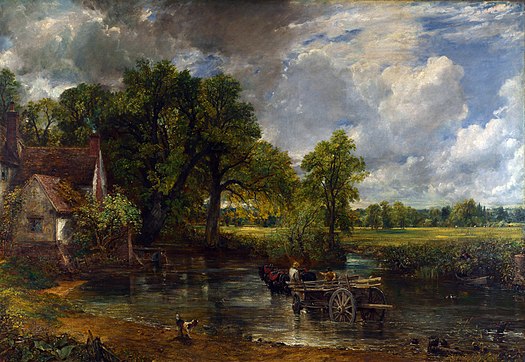
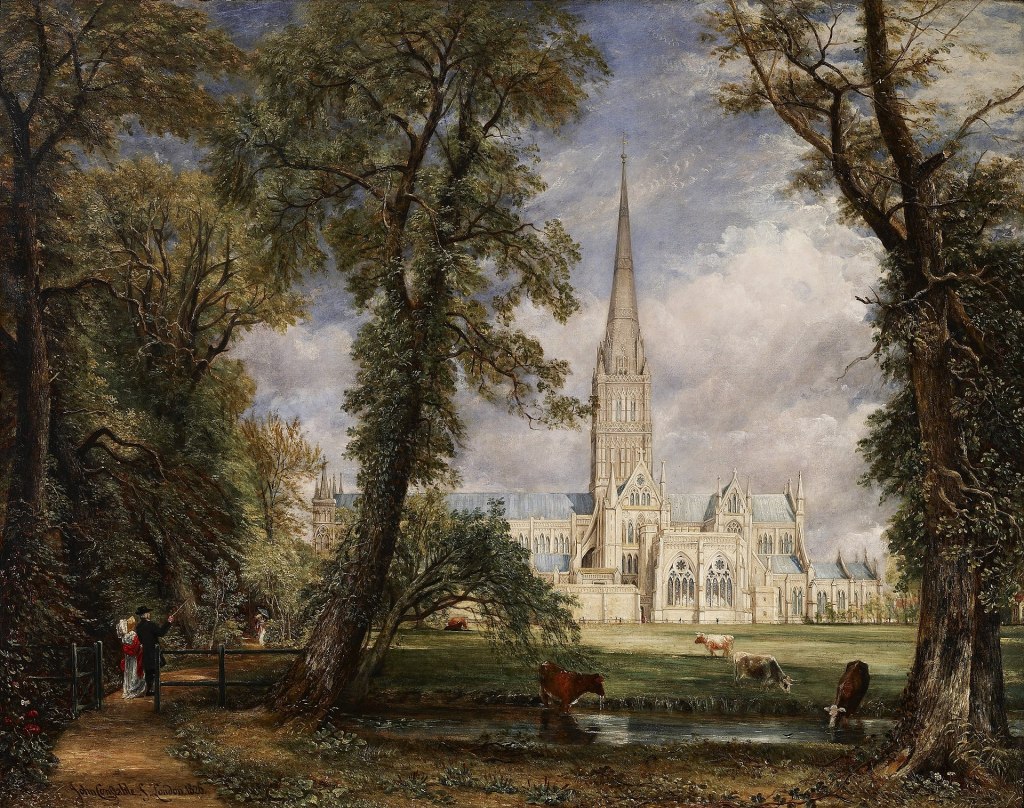
This first verse from Goethe’s Mailied (May Song) is deeply suggestive of the first use of nature that I commonly encounter: the aesthetic. I think that many people have some semblance of nature existing in this sense: it is an idyllic notion of a world ‘out there’ somewhere that has remained untouched by human beings. It may therefore provide something of a reprieve or reset, especially for city-folk. You might hear someone say a phrase such as, “I just need to get back in touch with nature; shall we do a hike this weekend?” From this example, we might see how the central thrust of this view tends to be aesthetic; we think of nature and see before the mind’s eye towering mountains, lush meadows, or meandering forest paths. Moreover, we might think of much late eighteenth through twentieth century poetry and painting that began to take this nature as its object for depiction – what is often called the ‘Romantic’ orientation. It is not, in this sense, something studied or theorized; it is something contemplated, delighted in, and at which we may wonder. This is, truthfully, one of the notions of nature that I appreciate most; it is essential to recognize, even if it is so different from the others.
The second form is certainly more theoretical: nature as abstraction. Though it is not quite scientific in the sense we tend to use that label today, it might be considered as a kind of forerunner to it. Nevertheless, what I mean by abstraction is our tendency to generate concepts as aggregates, wherein a central notion of various particulars is rendered though that ‘general’ concept exists nowhere in actuality – it is abstracted from a variety of given objects or ideas. (This was a notion perhaps brought out most concretely by Plato’s ‘Forms,’ though I think his view is more nuanced than these mere abstractions; the Form of Justice does not neatly fit this definition.) The common example of this would be to think about what a tree is; I think most people could easily do so in some detail. They usually have bark, they often grow nice and tall, and they tend to have some sort of foliage that grow from branches extending from a central trunk. What may be noted from this is that this does seem to get at some concept that we all understand, yet there is the problem that the particular tree each of us is picturing is likely different; I may picture a Birch, you see a Maple, and John Doe imagines an Evergreen. None of us is incorrect, but the nature of the trees – notwithstanding their different details – is that which we seemingly perceive as common in them all which allows this connectivity despite particular divergences. (We might also note here that nearly every noun operates in this fashion – dog, table, coffee, wall, building, etc.; there are enormous questions for the philosophy of language and mind to unpack on this front, but that is not my purpose for now.)
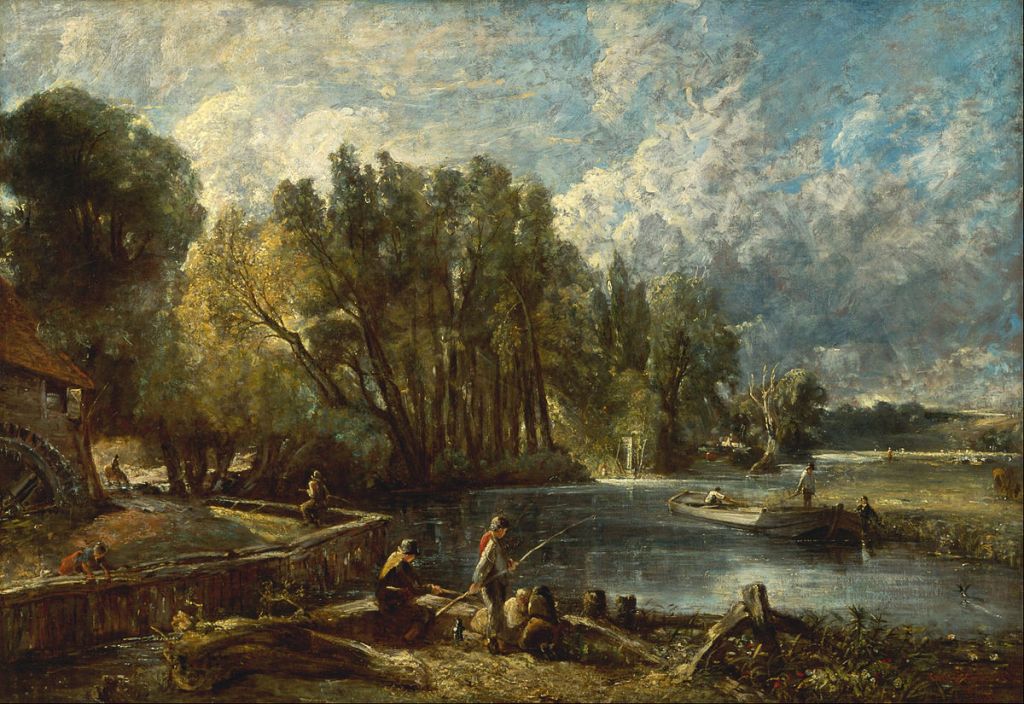
The third use of nature that is common to encounter, more so nowadays than in the premodern era, is that of the natural sciences. We might easily bring to mind physics, chemistry, and biology, though there are evidently others, and there are certainly more specific classifications we have like astrophysics. In these endeavours, there is some method specific to each form of science that yields certain findings about a given object; typically, it renders a description about the object that allows us to understand it in new ways. A current in the water of a small pond could be understood by physics, its molecular structure by chemistry, or biologically regarding the implications for the life teeming within it. We could call an explication from any of these sciences as a form of ‘natural explanation.’ This is often used today when talking about a multitude of goings-on; a funny phrase I often hear is when people describe a person’s actions by recourse to hormones or neurology. Some folks will reduce an unexpected episode of crying from a pregnant woman as ‘just hormones’ and ‘perfectly natural‘ – though I am skeptical of this explanation in various ways. Nevertheless, they are stating something that is true about the circumstance, though precisely what it means remains unclear to me.
A scorpion is sitting by a river but cannot get across. He sees a frog and asks for a lift on the lily pads. “No way,” says the frog. “You’ll sting me.” The scorpion responds, “No no! I might need to get back, and why would I sting you if you reliably get me there and back? There is nothing to worry about; I can protect you from other predators too.” The frog mulls it over for a moment but then agrees – he’s a nice guy. The scorpion crawls on his back, and the frog begins to leap from pad to pad. Halfway across, the scorpion suddenly stings him, and his legs begin to go numb – he can no longer jump. “You fool! Why did you sting me? Now we are both going to die here!” The scorpion sighs: “I’m sorry; it’s just in my nature.”
This story suggests a fourth use of nature that is quite similar to understanding it as science, especially in the biological sense: nature as instinct. This is the sort of claim that you hear when speaking about a rattle snake warning you with the shake of its tail is ‘natural‘ – that is what that snake does by its nature, its instincts as something ‘programmed in,’ so-to-speak. Likewise, we might think a small dog like a chihuahua or Maltese barking at a racoon that the little K-9 certainly could not handle in a fight. In response to this seemingly irrational behaviour from the dog, you’ll hear the owner scoff and say, “You know, that’s just what dogs do!” What distinguishes this from science properly speaking, in my view, is that these claims often are not based on experiment but mere common knowledge; I grant, however, that experiment could yield more substantial and specific results if someone wished to analyze an animal in such a manner. In any case, the notion here is that ‘instinct’ can act as a claim about nature in the sense that we just say that a certain claim simply is what something is, like the shake of a rattlesnake’s tail or a small dog’s yapping.
The next conception is one that has had an enduring recognition, though it has perhaps waned during the last five centuries (with some bemoaning this fact and trying to recover it): nature as fulfillment. Most commonly, this idea is associated with Aristotle who spoke of all things as having a τέλος (telos), which we might interpret as an ‘end’ or a ‘goal.’ Thus, the nature of a thing is said to be its ability to grow into something more or fulfill a certain purpose; we can see this in the way that an acorn ‘fulfills’ its nature by becoming an oak tree, or the way in which we might say that someone with a defective organ is experiencing something unnatural because, perhaps, their kidneys are not properly filtering out excess minerals that could be detrimental – they are not doing as they ‘ought.’ This way of describing the meaning of nature does, I believe, have a greater sway in our thinking about things than we tend to explicitly accept (especially in an age of, what I take to be, relativism and irrational desire for ‘autonomy’). It also, surely, has much overlap with other ways of thinking about nature that I will let you mull over. One thing I will say here is that this notion of nature pushes us more clearly in the direction of ontology, or understanding what a thing is in terms of its meaning within the whole of existence or Being.
Closely connected with this view of nature as fulfillment is our sixth conception of nature as morality. This, like the prior, is one that I think has also become less common in our era, but it nevertheless rests in the background of how we think about our behaviour. People might not often explicitly describe murder as unnatural despite obviously finding it immoral, but most people (who, frankly, have not deluded themselves) will grant that certain forms of sexual immorality – such as incest or pedophilic acts – are immoral with a tone of them being unnatural. No doubt, this dovetails closely with the prior notion of nature as fulfillment, since we could easily argue how something like incest or pedophilia is an abuse of how those sexual faculties of the person should be used. Nevertheless, I take this to be a distinct way that we do, in fact, use the term nature or natural. It tends to apply solely to human beings and suggests that there are things about our actions (as opposed to unconscious aspects of our biology like a beating heart or the nutrient extraction of the intestine) which are proper to us as human beings – to our human nature.
At this point, we have considered six ways that nature is used in English: as aesthetic, abstraction, science, instinct, fulfillment, and morality. The final way that I will consider it here is one that is certainly more philosophical or theological: nature as Being or God’s Creation. In this sense, nature might be considered as all that is; this notion is not, in my view, particularly salient or descriptive of much outside of rather niche speculative interests (like Heidegger’s ‘Why is there something rather than nothing?‘). Yet, simultaneously, this is integral to recognize as a form of nature in how we speak, and it does have a primacy with relation to the various other considerations of nature that I have herein defined. For instance, if one thinks that there is something ‘immutable’ or ‘essential’ about reality itself, in the sense that it is predicated on a grounding force that one must conform to in every detail, one will think about every other view of nature in a radically different way than one might think if he believes in an omnipotent God who shapes Being at will and can be cooperated with so as to reform His Creation from within.
I realise that what I have herein provided is much less systematic or directed than my essays tend to be; in some sense, I have merely provided a list of ways that the idea of nature is invoked without giving any way of sorting through this confusion. I have two main reasons for this. The first is that I do not believe that there is something ‘to be done,’ so-to-speak; in various contexts, these uses of nature, natural, or naturally are perfectly intelligible though certainly not interchangeable. If one person were to be thinking about nature in the sense of morality or fulfillment while discussing the behaviour of a child but someone else was thinking about it in terms of instincts and biology, they would quite easily be speaking past each other. We might think of a child of three years constantly punching his peers and screaming for no apparent reason – actions that are, depending on one’s manner of looking, both perfectly natural and entirely unnatural. If, however, the people in such a conversation were to clarify in what manner the term natural is being used, they would likely overcome their conversational disjuncture quite quickly.
Finally, I hope that my reason for writing this piece has become self-evident. I think that a lot of people today speak past each other with regard to us human beings in mistaking how different people are using the terms nature, natural, and naturally to contemplate ourselves. This is, if only looking in a cursory manner, a central problem that has plagued the modern (and post-modern) world with regard to how we, in this era, have thought about ourselves – though the ancient Greeks, too, had some debate about these realities in the form of their arguments about the relationship between νόμος (nomos: law) and φύσις (phusis: nature or motion). The disadvantage that we moderns have developed is that we no longer have the distinctive terms – nature itself has become muddled, though there have been some terms such as will and freedom in their modern idioms that have perhaps taken the place of νόμος in opposition to nature, φύσις. This is, of course, but a beginning to thinking about this problem of our (self-)understanding, but I hope you have been made as desirous as I am to clarify this issue so as to more properly become ourselves.
 Hoping for Clarity