In what is, in my view, one of the most audacious works of political theory written in the twentieth century, The Human Condition, Hannah Arendt formulates a distinction between two ways in which human beings relate to one another: power & force. This pairing is specified by her to have a meaning that is not contrary to common parlance but also is not quite intuitive. It is, however, a clarification that I find so convincing that it has infected my daily speech, and I now tend to use these words in conformity with her explanation of the difference between the two – and it is for this reason that I think it is worth reflecting and modestly extrapolating upon.
By way of a little background, Arendt’s The Human Condition is something of a difficult work to classify. Above, I referred to it as a work of political theory mainly because I cannot think of a better term – but I also find this insufficient. It is an exploration of what it means to be a human being, looking predominantly through a classification scheme of the different sorts of activity that human beings perform and how they relate to each other through these forms of activity; it is, however, also a work that seeks to engage with several titans of European philosophical thought: Plato, Aristotle, Augustine, Locke, and Marx all feature prominently throughout the text; and the last section of the book – “The Vita Activa and the Modern Age” – is a tour de force in gathering together many influences of the modern world that have led to various crises, at least as far as Arendt is concerned. In brief, I must only say that it is a text you must read – I will be unable to do it justice here.
Moreover, herein I am hardly scratching the surface of what she provides in the text, and I am unable to unpack all the implications of what I will relay given that I am not recounting the whole book. This pairing, power & force, is highlighted in just a brief section of the text that I am focused on here: section twenty-eight, entitled “Power and the Space of Appearance.” This section makes up just eight pages of this three-hundred-and-twenty-five page text, so this can hardly be called exhaustive, and yet I think that this brief excerpt could motivate thousands of words of reflection. Ideally, I would quote the entirety of the eight pages, but I have the space to only paraphrase and restate, so I must recommend that you find it and read it for yourself – just another endorsement that this book be sought by all.
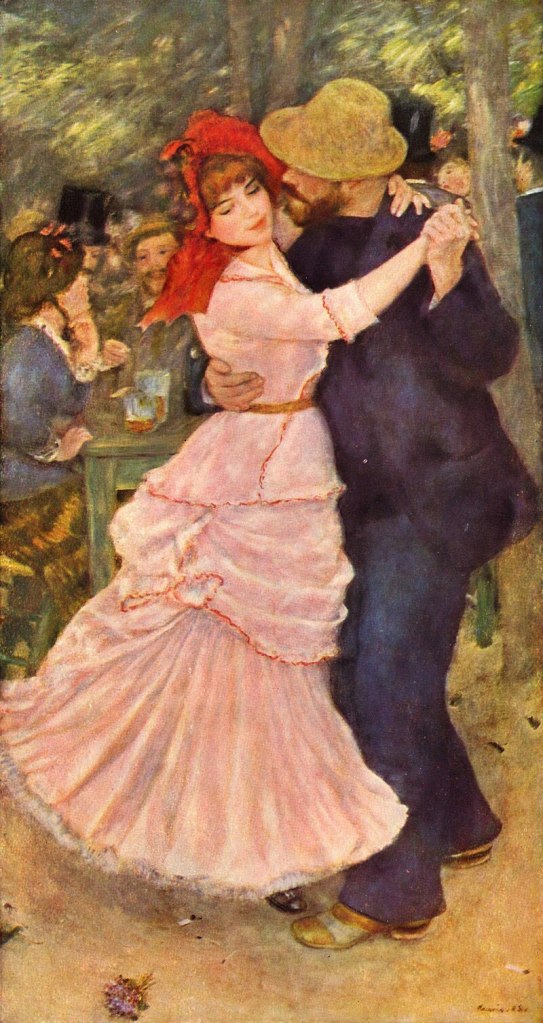
For Arendt, power is essentially a cooperative movement wherein a common project or life is being actively pursued by a certain collective of people; this need not be immediate, in the sense of a ‘goal,’ but rather that there is a joint vision. This can mean even a common life in which particular objectives are pursued, but the point is that there is an active coming together of wills among a people. When these wills coalesce around a shared space and recognition, they are said to have power. “Power is actualized only where word and deed have not parted company, where words are not empty and deeds not brutal, where words are not used to veil intentions but to disclose realities, and deeds are not used to violate and destroy but to establish relations and achieve new realities” (200). Arendt also seemingly associates power with individual strength, as it frequently takes a person of great skill and ability to actualize power and bring people together to achieve new realities. In some sense, strength builds up into power, though the former is not identical with the latter but a merely prerequisite for it; and neither of these terms should be understood as inherently domineering or oppressive in any capacity.
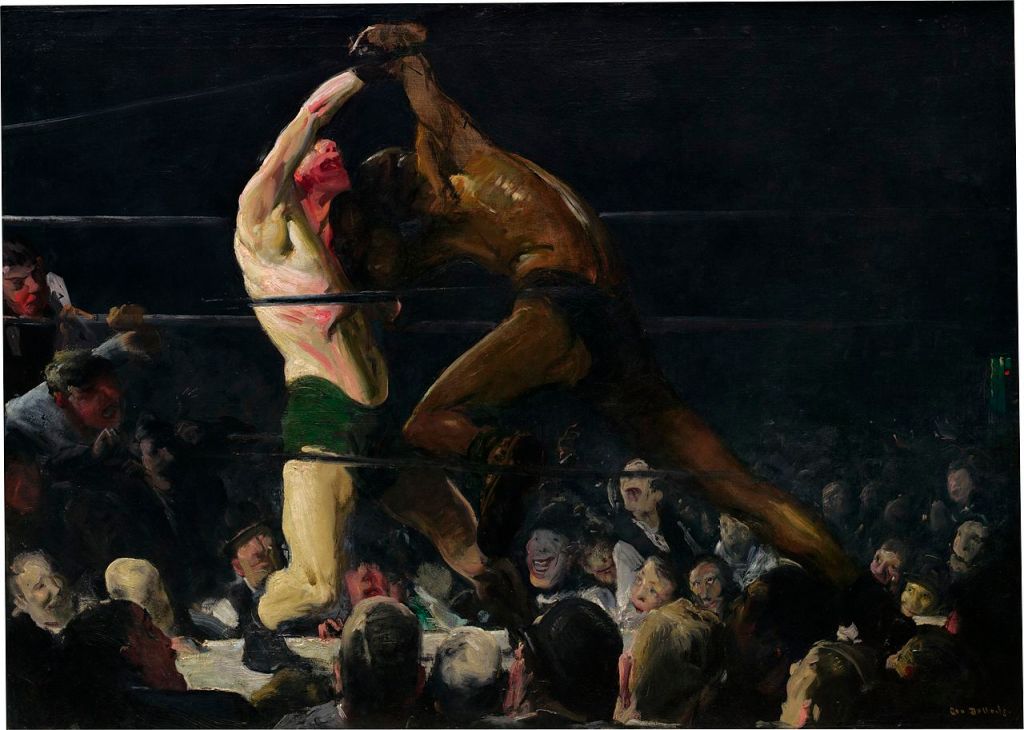
Force for Arendt, however, is more closely associated with violence and is, therefore, in some sense opposed to power. Insofar as power is understood to be the coming together of people’s wills into a joint enterprise, force would instead suggest that their wills have not converged and violence is therefore being used to enforce one person or group’s will over that of another. Now, this need not be understood in a merely negative or immoral sense; there are occasions in which force would be necessary. For example, parents will likely need to use it from time to time in order to properly orient their children, as one can hardly guarantee that his or her children will always see eye to eye with one’s parents. Moreover, in political contexts, there is often a threat or a situation thrust upon oneself that requires force or even violence to react against; oppression, itself a form of force, would suggest that the oppressed likely need to push back with force or even violence of their own to become recognized. (Intriguingly, this sounds like it could become a never-ending cycle of violence; nevertheless, Arendt later goes on to speak of the necessity of forgiveness in politics and power – a reality she believes finds its apotheosis in Jesus the Nazarene, which is noteworthy since Arendt herself was of Jewish heritage.)
Now, though Arendt was hardly an ‘idealist’ in her theorizing, I do take her division between power & force to be ideal in a certain sense. In propounding these alternative ways of relating to others, someone might believe that she holds these to be mutually exclusive. I would suggest that this might be true – though there could be some ambiguities – between two individual people, but at the level of a whole society or community there could be a much more complex interplay between power and force. For instance, there could, in theory, be two separate groups that have members who are enacting their power together and engaged in a joint vision; that vision, however, may involve exerting force or violence against another person or group. Thus, in a given collective, there can be complex arrangements of power & force that are frequently bouncing off of one another, and there is also the evident possibility that the precise dynamics of those movements is not stable, ever subject to changing allegiances and forceful conflict.
Evidently, there is something of a necessary relationship between power & force in Arendt’s conception of these terms – they are both necessary parts of the human condition – but she gives an evident preference and prestige to the role of power. In her view, to be human is not only about the fulfilling of our natural needs (i.e., food, shelter) but comes to its fullness when we are able to engage with other people as persons. The point here is that who we are can more properly appear and be seen by one another. This is not meant merely in the sense that I know who I am internally and then get to show it (for who ever knows himself or anyone else entirely prior to death?), but rather that the very act of creating and maintaining power with others is an activity in which I reveal who I am both to others and to myself. This is a delicate balance requiring proximity, relationship, trust, and a myriad of other attributes, and it may be necessary to stabilize the world in certain ways through force to even make power potential. (Arendt, drawing from Aristotle through, evidently would have seen that the Athenian polis was predicated on domestic force.) It seems to me, therefore, that Arendt views power and its capacity to help us truly appear to one another and see each other as the ultimate goal of human relationships and action, and therefore all things should be ordered hierarchically to this end.
This has profound implications for several institutions that are essential to daily life, but I will point to just three here: family, government, and religion. In all these cases, there is a ‘political’ side (in the Arendtian sense) to these relationships in which we can eventually appear to one another through actualizing power in our convergence of wills. Sadly, I do believe that many people tend to miss this orienting principle of ‘power,’ in the sense Arendt intends it, which winds up distorting our lives as most of our relationships become about force (or, worse, violence). We do not desire to act with one another and appear most fully to each other, and this winds up reducing us to mere contests of asserting our wills in various ways. This is what Arendt takes to be central to the modern world: appearing to one another has been made subservient to feeding our appetites and maintaining our bare lives, but this prevents us from fully engaging both in ourselves and others as persons that reveals who we are through great deeds.
Arendt’s theory provides us with a strong linguistic corrective and opens up the possibility for what it means to live among others. Power is not merely the capacity to exert one’s will – that is closer to what force means; instead, power is a concrete circumstance in which there is the potential to reveal oneself to others through joint action and strength. To devolve to the use of force is a degradation both of the self and the other, as it prevents people from genuinely appearing to one another. We yearn for the assurance that we are in a situation in which we have trust, community, and commonality that will allow for the risk of appearing and revealing oneself to be well received and genuinely known. Though force is an unfortunate necessity of the human condition, we might hope it can be overcome or at least be abated insofar as we order ourselves to making power possible in each moment and plumbing the depths of who we really are.

 Hoping for Clarity