You know – nostalgia just isn’t what it used to be…
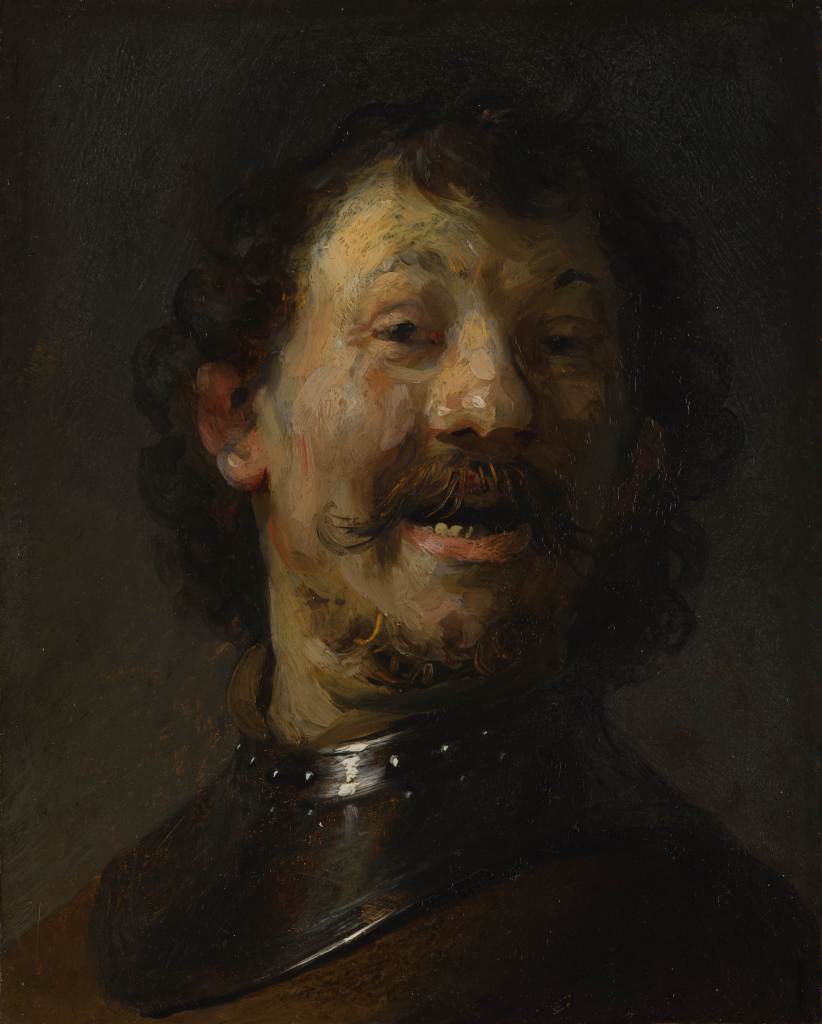
A somewhat niche topic of interest to me has been the philosophy of humour. It is not a booming field, and I recognize that many people do not like to critically unpack jokes – I am sure many of us have had the grueling experience of needing to explain a joke. Indeed, there is an old adage that I do not know the proper source of: ‘Jokes are like frogs; by dissecting them, you may understand them better, but they die in the process.‘ (If you steal this pun, you are also obligated to immediately explain the joke involved to your audience – they will love that.) Nevertheless, my theoretical bent has led me to minimally investigate this topic over the past few years. My intention herein is merely to provide an overview of the topic for your interest, and to add my small addition that I have not yet found in the literature on this subject.
It is important to first recognize that what I am discussing herein is a question of humour and not laughter. This might seem like splitting hairs, but – analytically – these things are quite distinct. Firstly, when we hear a joke (especially the kinds that I enjoy), we do not necessarily laugh – sometimes we might just nod our heads, smirk, or even groan. Nevertheless, we can recognize that there is humour in the statement, even if it does not produce a laugh as such. Did you hear that it is illegal to laugh loudly in Hawai’i? It may seem odd, but you’re only allowed Aloha. Conversely, there are times when laughter does not necessarily suggest humour – a commonplace example is laughing when being tickled. On the side of laughter, there is a lot more ‘scientific’ literature looking at things like neural and nerve activity connected to the laughter; this is not so with the humour aspect, as the humour tends to require self-conscious consideration that is not reducible to automatic physiological responses like laughing at being tickled.
There are technically two dominant strains of humour theory (though they are not equal), while there is an additional one that occasionally gets lumped in despite that it is more properly a theory of laughter (which I believe was constructed or at least popularized by Sigmund Freud). The three theories are incongruity (or incoherence) theory, dominance theory, and relief theory (this last one being the aforementioned outlier). I will take those in the reverse order.
Relief theories of humour tend to explain that humour is something of a psychological or neurological build-up of tension that needs to be released somehow; we can think of this as merely a focus on the anticipation of a punchline. This means that there are not strong, specific examples for this theory of humour. (But I will give you a joke anyways: A screwdriver walks into a bar, and the bartender says, “Oh cool! We have a drink named after you!” The screwdriver looks at him confusedly and responds, “What? You have a drink named ‘Steve’?”) The main issue with this theory is that a joke might only be recognized as a joke after the punchline is delivered (a favourite style of joke telling for me). In such instances, there is no ‘anticipation’ to be built up, so this theory struggles to account for this reason for finding humour. There may, however, be some explanatory power in this theory for laughter, but I will have to leave that for others who take that to be their main interest.
Now to the more proper theories of humour as such; first: dominance theory (also well described in German as Schadenfreude theories). This is a view of humour that has an ancient lineage but also has modern variants. The idea with this is that humour is a form of ‘put-down’ or ‘insult,’ and the joke teller gets a kick out of demeaning the other. A common example of this is ethnic humour. If I will be allowed to indulge myself as a Canadian in the spirit of fun, I can provide an example: During the war of 1812, what did the British loyalists do when the Americans threw grenades at them? They would just pull the pins and throw them back. Now, you’ll first notice that this is a dumb joke as grenades were not invented for almost another century, but the gist is there: what’s the point of the joke? Americans are dumber than Canadians, and I am a Canadian. Another example of this sort of humour is the bizarre fascination of teenage boys (and some others) with ‘fail’ videos wherein people wipeout or hurt themselves in various ways. Again, the dominance theory would suggest that the laughter is laughter at the person failing, as if the person laughing is getting a kick out of being better than the failure because they did not do something so foolish.

This theory is not empty, but it is widely recognized that it is quite insufficient. This case is usually made on two different grounds. The first is that the dominance explanation for the examples I provided are possibly true but not necessarily true. In the case of ethnic humour, it should be noted that you could swap out the two ethnic groups for two that are entirely unrelated to oneself (and perhaps even each other) and the joke still lands to some degree. For example, you could swap out American for Polish and British loyalist for Columbian and the joke’s force (though diminished) still makes a kind of sense. As well, for the fail videos, many people laugh in a manner that implies sympathy as opposed to derision. When I watch a video of a soccer player accidentally running into the post of his own net while trying to make a save, I may laugh – but it is not necessarily because I am looking down on him. It may rather be that I understand the ridiculousness of being in that position having been so myself.
This brings us to the ‘master’ theory that tends to dominate the philosophy of humour, though it is not necessarily settled in its details. This is incongruity or incoherence theory. If we look back to the various jokes already given in this brief essay, we will notice that they all rely on a kind of incongruity in their subject matter. Puns are particularly salient here; a pun tends to riff off a word having two meanings that can be swapped out but which we were not necessarily expecting. A new coffee roasting company just bought a ten-story building in town with roasting drums on every level! They also, however, put a cafe in on the first floor – which is quite convenient – as that is where the ground beans are. Most jokes, however, even if they go beyond puns, tend to have this structure: set up a certain expectation and then mess with that expectation by the end. This allows this theory to encapsulate the other theories: the dominance and relief theories might have some level of explanatory value, but they rely primarily on the presence of incongruity.
Now, there is a limit to this theory which is that incongruity does not seem to be sufficient, though it may well be necessary. Mere incongruity does not appear to get us all the way to a joke. If I say, “Why do chickens like to eat Fruit Loops? Because dogs have 20/20 vision!” – well, you might justifiably be tempted to punch me in the face. That is just meaningless, totally incoherent! But that is the theory, is it not? (If you did happened to laugh at that above ‘joke’ about chickens, consider where you found the humour – was it in your own expectation of a joke being subverted in that it was not really a joke? It seems that context therefore has a deep influence, though this might pull me too far afield of my present interest.) What is the additional ingredient that is needed then? This is the small contribution that I would like to make here, which I have yet to find in the philosophical literature – though this hardly means it does not exist…
It seems to me that incongruity theory relies on some common recognition of truth and falsity, or at least one of the two. In the coffee joke, we would understand that the ‘ground floor’ does not mean the floor where there are inherently coffee grinders; we recognize that knowing to throw a grenade but not knowing to pull the pin is a rather exaggerated form of stupidity; the screwdriver, while actually a bit complicated, relies on our recognition that screwdrivers are not animate, self-conscious objects but that, if they were, they likely would not be named ‘screwdriver’; etc. etc. What is even more important is that jokes rely on a common recognition of what is true or false. The joke would not land if we did not mutually understand the terms of the joke and how they relate to reality (hence why it can be very difficult to understand a joke in another language when one is just beginning to learn that language). This is why there has been a common trope, perhaps brought to its pinnacle by Shakespeare, of the fool being the one who can always tell the truth – for it is not an abrasive truth or one that is slapped in your face. The fool says a truth that sounds like falsity, and he relies on you to understand the truth embedded in it.
Humour communicates a truth into the mind of another without saying that truth explicitly. Now, I will acknowledge two key caveats to what I have said herein. The first is that ‘truth’ mentioned in this explanation of humour can mean either: 1) a positive assertion about something specific; or 2) an affirmatively recognized falsehood. Thus, the outcome of a joke could equally be ‘that is what that means’ or ‘that is not what that means,’ though in either case it is a clear statement of fact, positive or negative. The second caveat is that I am a skeptic, and I therefore am not suggesting that humour is the means to the ‘Absolute,’ the ‘True,’ or the ‘Good.’ I do, however, believe that we get approximate intimations of what is good and can therefore make tentative but cautious steps in that direction. And it is my contention that humour is one path toward this direction, one in which we can frequently find delight and much else beyond mere laughter.

 Hoping for Clarity
3 thoughts on “Some Notes on Humour”