
Modern German terminology holds a distinction between two different words that can both be translated into English as ‘history.’ Historie, evidently connected with our own English term, means the formal study of the past by historians; Geschichte, on the other hand, is a term that usually means ‘story’ or ‘fable’ but can also mean history, though it means this in a more quasi-mythical sense. I find this linguistic distinction to be of great use despite the lack of a similar distinction in English. When we refer to ‘history’ in the English tongue, it often has an amorphous set of conceptions that sit behind the surface. We can quickly think of examples of both terms that highlight this confusion.
If one were to listen to the speech of a politician on campaign proclaiming, “The history of our nation has been one predicated upon a dream of freedom and prosperity generated through communal integrity,” he is using the term in a way that is fundamentally different from the manner in which the local college professor aims to discuss “the history of agricultural development in British North America between 1825-1850.” The former example is referring to a notion that has this quasi-mythical flavour; it is aimed toward action and maintaining a vague sense of continuity for the identity of a nation—we may go so far as to say that its literal truth is less important than the purposes it aims to achieve. The latter example is more ‘scientific,’ insofar as we are invoking the Latin sense of scientia, in that it will require a rigorous notion of hypotheses, evidence, and continual revision for the sake of merely understanding the past.
Now, though this distinction may seem to be of a largely esoteric and academic bent, it has real implications for much of our lives and the way we discuss things within our contemporary culture. We (post)modern folk like to consider ourselves as highly educated and better informed than those generations who have come before us; we thus, whether we are truly doing this or not, try to ‘follow the evidence’ so far as possible when engaging in debate and advocacy. We see this as people constantly attempt to invoke scientific data and historical example when making arguments—though the precision and accuracy of these claims are often quite suspect. Let us consider a few examples—ones that will surely cause some consternation in the average North American reader of today.
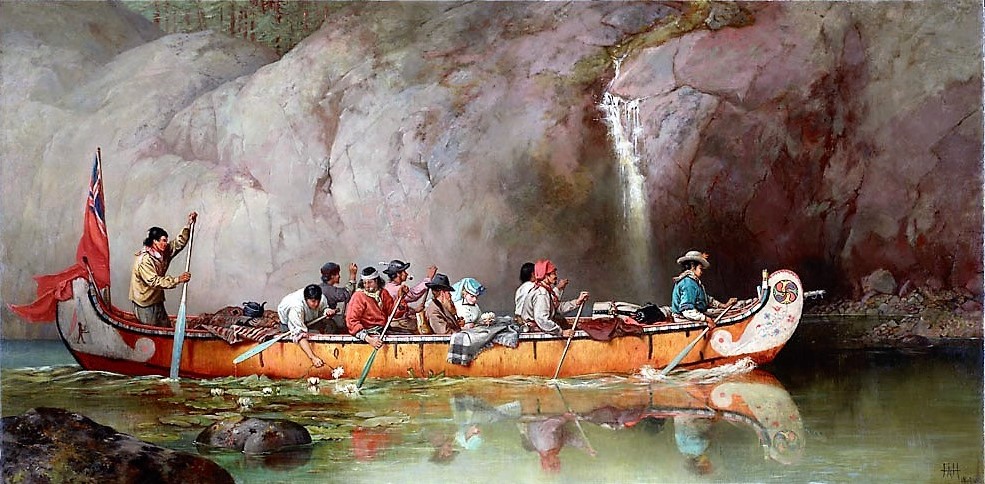
If one were to accept the more facile conceptions of feminist thought, we might be encouraged to see the relationship between men and women as one of continual subjugation until the last century and a half. Commonplace discussions of relations between Indigenous Peoples and Settlers would have us believe that a bunch of white racists arrived on the eastern coast of North America and opened fire on the peaceful and nature-loving folks already settled on these lands. Those focused on race relations sometimes simplistically emphasize that all institutions emerging from “white” cultures are inherently racist and support a white supremacist agenda, even if only inadvertently. I do not think it should be controversial to say that these claims are, even prima facie, ludicrous to hold as truths of Historie with any seriousness.
Seeing the fire I may have just started, however, let me attempt to lay down a few charitable stones to keep this more contained. I am not here suggesting that these claims are entirely fallacious; I surely concede that all three viewpoints I just referred to possess, at minimum, grains of truth. What I am instead interested in is understanding such claims as being either Historie or Geschichte. As stated just above, I take these claims to be utterly ignorant from the perspective of Historie; to have such a view of the relations of men and women, indigenous and settlers, or “whites” and “non-whites” from a thorough reading of Historie seems to me impossible. This is not to say that specific moments of horrible misogyny, colonialism (in the worst sense), and racism have not occurred. I am merely suggesting that the true Historie is far more complicated, and we should treat as suspect any reading of history that is so facile, commonplace, or simplistic. A single, homogeneous line of development is to be found in history only if history is made a dummy upon which to practise the skill of a ventriloquist.
If we revise our understanding of these claims as being a form of Geschichte, however, I believe they become broadly more plausible and comprehensible. As I stated above, Geschichte can also be seen as having a quasi-mythological tilt that is less concerned with literal Historie than it is with making a practical claim through the lens of a community developing together out of a vaguely common past. Thus, the feminist, post-colonial, or racial commentator should be understood as making a claim that is more like the prior-mentioned example of the politician than it is like the college professor: the main impetus of the claim is not fundamentally about clarifying the past but about directing the present and future.
The claim I am making here need be nothing more than that the referral to history itself when dealing with the many claims we make today is often a non-sequitur. If one encounters a person making a claim about “history” to justify what they think we ought to do in the present, we should not take them to be making a historical claim in the sense of Historie. We should understand them as taking a historical phenomenon as a representation of something they see within their practical life, and they are perhaps abstracting out from Historie a form of Geschichte to make their point with more force. A simple example of this is the way that modernist thinkers simply refer to Galileo when Christian institutions do something they find distasteful; the Historie around Galileo and his altercations with the Church are actually quite murky and complicated, but we can still understand the rhetorical meaning and impact of this invocation when abstracted from that more rigorous view of Historie.
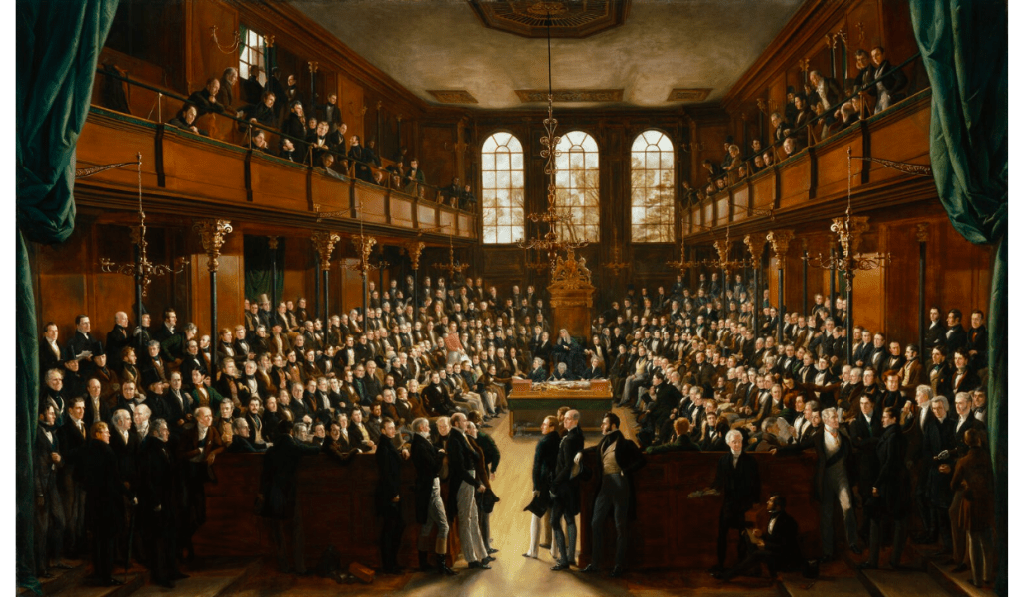
I will make a one final note about this problem I foresee in the continued use of history in contemporary dialogue, one aimed to avoid a possible accusation against my view expounded here: do I take history to be useless, as if I take history to be entirely separated from practical discourse? Not exactly. This aspect of what I have outlined above is complex, so I will give just an intimation of an answer here. I understand practical claims and historical claims to be governed by different presuppositions; practical claims have to do with directing the action of agents in the world, while historical claims are present understandings of the past constructed by the various archeological and civilizational data to which we may or may not have access. Thus, there may be a moment in which different people recognize a mutual need to direct themselves toward an understanding of the past in the way just summarized; however, this often requires a significant amount of faith in one another and significant levels of patience to honestly work through the evidence.
An example might be the descendants of both Indigenous and European folks on the North American continent wanting to examine the historical realities of how land was exchanged between the many ethnic groups extant in North America to ensure deals and deeds are being upheld. What we note, however, is that such an inquiry into those past occurrences implies a mutual recognition of many current practical realities such as legitimate ownership and maintaining one’s oaths—but such presuppositions are not in any way historically necessitated in the present. Those are practical realities to which we subscribe presently—not because history told us to do so, but because we think, for one reason or another, that this is how people best conduct themselves as we have come to be. From those practical views, Historie can then be informative—but this would be impossible without the mutually held practical structure of that circumstance.
As usual, my discussion of any topic hardly provides any insight into what precisely needs to be done. Such is not the task of the theoretician but of the agent in the world to determine with those other agents around him. I merely desire to draw attention to a small complexity in how we understand and use history in our usual conversations and problem solving. Historie is, in my opinion, a difficult and laborious effort to understand the past that many people—myself included—rarely venture to undertake fully. We, as human beings, are typically much more concerned with how we live our daily lives and look to the future; for this, the allusions of Geschichte can be both illuminating and effectual, but I hope that they not be conflated with the rigor of proper Historie.
 Hoping for Clarity
One thought on “A Problem of History”