A common theme within my rambling attempts at philosophy is that of a profound and thorough skepticism. This is made clear by simply looking to my most beloved influences: Plato, St. Augustine, Michel de Montaigne, and Michael Oakeshott. Labeling some of these thinkers as ‘skeptics’ will, I imagine, jar some readers. Take just Plato: this thinker who is perpetually looking after true knowledge is a skeptic? How could this be justified?
I think we need look no further than Phaedrus, one of Plato’s more poetic dialogues. As paraphrased so eloquently by Oakeshott: “‘Now do you conceive it is possible,’ asks Socrates, ‘to comprehend satisfactorily the nature of the soul without comprehending the nature of the universe?’ And Phaedrus can but answer, ‘No’.” To understand a single “thing” is to understand it within a context; there is no way for me to understand myself without defining several relations I have to my surroundings: human, son, brother, friend, roommate, student, teacher, etc., all of which must also be subsequently defined. To understand something in abstraction of its context is an impossibility—perhaps even what is at the heart of all misunderstanding.
We are, from this standpoint, apparently doomed to a sort of nihilism about the state of our reason and our knowledge. It seems that to know anything at all, we must know everything in its surrounding context, which would imply an absolute knowledge of the cosmos itself. I do unabashedly think this to be the case of a strictly philosophical mindset; all can be doubted, further questioning can always ensue, and ever more can be known.
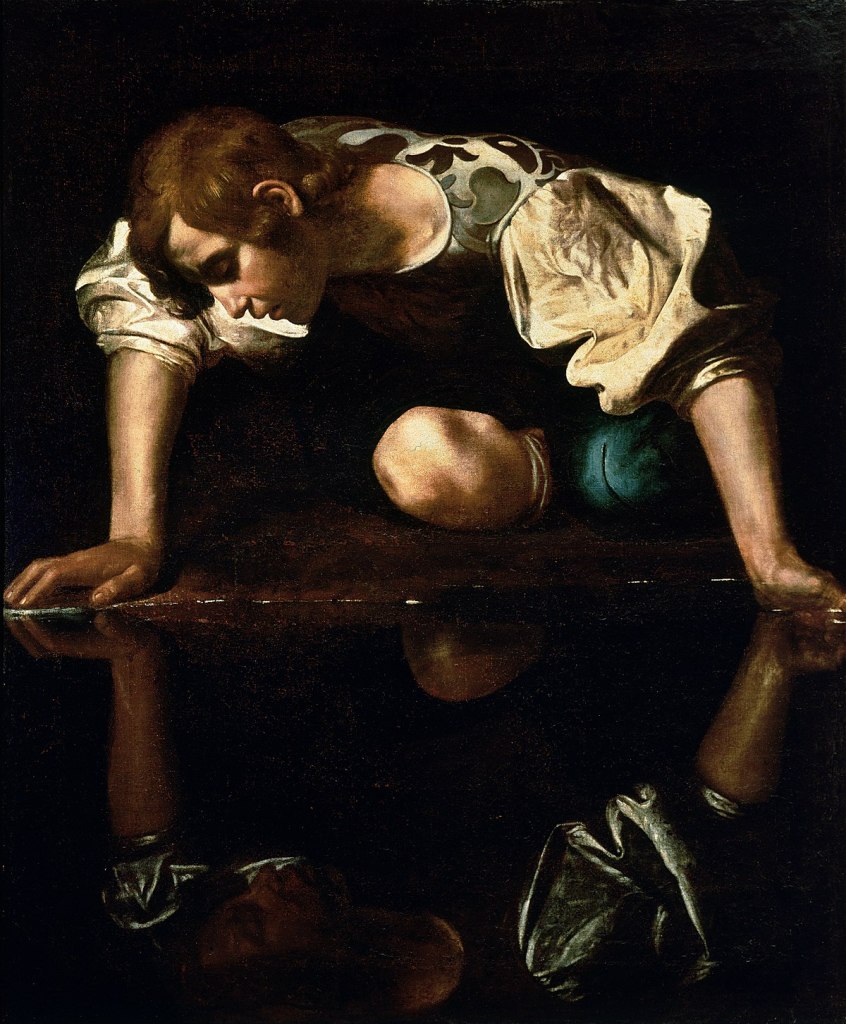
I believe an interesting philosophical claim that we may use to highlight this point is that of Rene Descartes: Cogito ergo sum or I think therefore I am. In short, this claim emerged from an attempt to find a conclusion—which could not be doubted—upon which to ground all epistemology. Descartes, living from the late 16th to mid-17th century, was concerned with coming to a philosophical foundation of knowledge that was as solid as the findings emerging from the newly developing natural sciences. Descartes found that the sole thing he could not doubt was the thing that was thinking, for to doubt the thinking thing would make the very act of doubt impossible. This ‘thinking thing’ thus became the foundation of knowledge: the individual.
I must admit that this argument, on its face, feels right. I am thinking right now as I consider these thoughts produced by Descartes some centuries ago, and I could not possibly doubt the very thing doing the doubting for then my doubts could not be had. We have thus arrived at a supposedly ever-implicit ‘I’ behind all things. Most people today, especially among us anglophones who have a rather ego-centric language, likely buy into this at some level. I believe it is indeed the force behind saying such silly things as “This is my truth.” If the ‘I’ cannot be doubted, then what the ‘I’ produces must, in theory, be no less sure.
Let us, however, come back to the original claim then: I think therefore I am. We could easily modify this claim slightly to say: ‘I am thinking,’ or ‘I am thought.’ My first question then is: ‘What thoughts?’ If the ‘I’ is the very act of ‘to think,’ what thoughts is this ‘I’ thinking? Can there be thoughts outside of the whole context of experience? It seems to me that all Descartes has managed to find is an abstracted concept of the self within the totality of his lived experience, but such an abstraction from experience could never have come to Descartes’ conclusion.
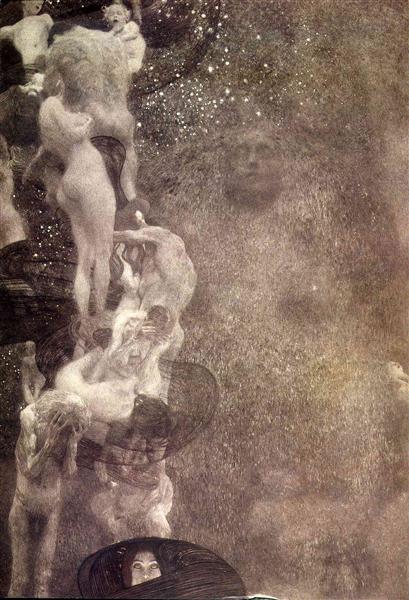
(destroy; photographic reprint), 1900
What I hope has thus become clear is that, in the sense outlined above, I believe that Descartes simply failed to drive the philosophical inclination to its full extent; in attempting to ground his theory upon the ‘I,’ he is left with little more than a bare abstraction that has no content or meaning. If his philosophical mood had been more intense, Descartes would have pushed beyond this notion of ‘I,’ instead asking what it means for an ‘I’ to be through an analysis of the greater, contextual whole in which a singular ‘I’ exists. The ‘I’ leaves us in a somewhat solipsistic frame of mind which could lead to a sense of despair, as everything outside of itself could be doubted.
I think, however, that this conclusion becomes rather misleading. For one, the ‘I’ itself—in becoming a mere abstraction—is hardly a “fact” or “foundation” upon which to ground a philosophy or epistemic position. Surely there is something which we refer to as ‘I,’ but precisely what that is remains something of a mystery to us; we remain a mystery unto ourselves. There could be a kind of fear or anxiety that emerges from this, though I do not believe that we should view it as a cause for alarm. What precisely the ‘I’ is remains, to some degree, a matter of opinion. By this I mean not a flux of all equal opinions, but in the sense that any determination of the self is far from final. “To accept the fact that…I…am other than what I imagine myself to be. To know this is forgiveness.”
Now, it may be objected that I have opened the door to some form of relativism, but this is a claim I will fervently reject. Indeed, I believe that Descartes’ notion that we can be utterly sure of ourselves as thinking beings and understand what that means to be the essence of relativism, as if what is true therefore becomes simply what the thinking thing thinks. In my view, we as thinking things must consider the whole of our thoughts and weigh the various aspects accordingly. We must avoid incoherence and omission—we must look to the whole to understand the self and find ourselves to understand the whole. We perpetually opine, forever moving backward and forward, inward and outward, hoping to catch a glimmer of the True but ever falling back into our delightful world of opinions (of which there are, surely, some better and some worse).
I had considered ending with that final point, however, I believe I have left something to be desired—if we are always in a world of opinion, how can we ever be sure of what is right and wrong? To be brief, I am unsure if you ever can be, at least absolutely. I also think that, from the standpoint of philosophy, there is no ‘right and wrong,’ but merely ‘true and untrue’—that which has a place in the whole and that which does not. ‘Right and wrong’ is a designation of the practical life, which aids us in our return to Descartes and finding virtue in his theory: practical activity—or moral activity perhaps—requires this notion of the ‘I.’
When we refer to something as ‘right’ or ‘wrong,’ we are dictating that a conscious agent executed an act either in the correct manner or incorrect manner. If there is no agent, there is no possibility of such a moral qualification. A rock falling to the earth is neither right nor wrong, for it intends nothing in the sense of moral actor. Thus, it does seem that what we consider to be moral behaviour is predicated upon such a notion of the ‘I’ (and the ‘You,’ ‘We,’ or ‘Them,’ which is fundamentally just more ‘I’s in different positions or conglomerations). Such notions are fundamentally situated within a world of change. The world of ‘right’ and ‘wrong’ is not perpetual, it must come to an end—each ‘I’ is faced with the reality of death. Death, though preventable from coming too soon, must always loom, and thus the experience of the ‘I’ moving into the life after is unclear—such a truth is beyond our control. This is, in my view, why Socrates—as a philosopher—embraced his death as the culminating stage of life, for philosophy sees no fear in perishing from this life as we know it.
In my view, then, ‘right and wrong’ exists within the world of the ‘true and false,’ but it is always lesser than it. What is ‘wrong’ is merely a lesser form of truth, with what is ‘right’ reaching closer to that philosophic reality but never fully. What is ‘right’ places less of a gulf between us and the past and future, the hallmarks of change; it makes us feel at home in the present and to not fear the possibility of change. Such a perspective within practical life—impressed upon us by the necessity of death itself—is the closest we ever come to a fully philosophical experience in which there are no assumptions, abstractions, or modifications.
 Hoping for Clarity
Don’t give up
LikeLike